The area of management known as “hospital management” is dedicated to organizing, planning, coordinating, and managing healthcare services in hospitals and other healthcare facilities. In order to deliver high-quality patient care, it guarantees that medical services, administrative tasks, human resources, finances, and support services collaborate effectively. IIHHM Hospital Management College in Saltlake, Kolkata teaches all the aspects at it’s hospital & healthcare management courses.
Pursuing hospital or healthcare management can be fascinating for who ever think of working at hospitals, and the best part is quite surprising that you don’t need to be a doctor or from science background. It can be achieved with only a hospital management course though it’s quite expensive in area like Kolkata, Saltlake but IIHHM offers cheapest possible fees to complete hospital & healthcare management. Beside these facts some other facts that inspire people to take hospital management as as follows:
As mentioned above IIHHM offers the most affordable hospital management course in Saltlake, Kolkata. But this might not be concerning enough to choose a college. Selecting the perfect institute plays a vital role in shaping a successful hospitality career. At IIHHM, students get an education that goes beyond textbooks. The institute primarily focuses on experiential learning through training lab of Front Desk Lab, Patient Care lab, Medical Records keeping & billing, administrative tasks, internships, industrial visits, workshops, and personality development programs.
The institution also puts a strong emphasis upon placement support through connecting students with leading hospitality brands via campus recruitment drives and industry partnerships. These steps helps graduates start their careers with the most respected organizations in the hospitality sector.
Placements are not optional, a student who successfully completes the course get placement nationally or internationally. This might be a good reason to join an institute. Training and Placement part covers a vast portion for your career development.
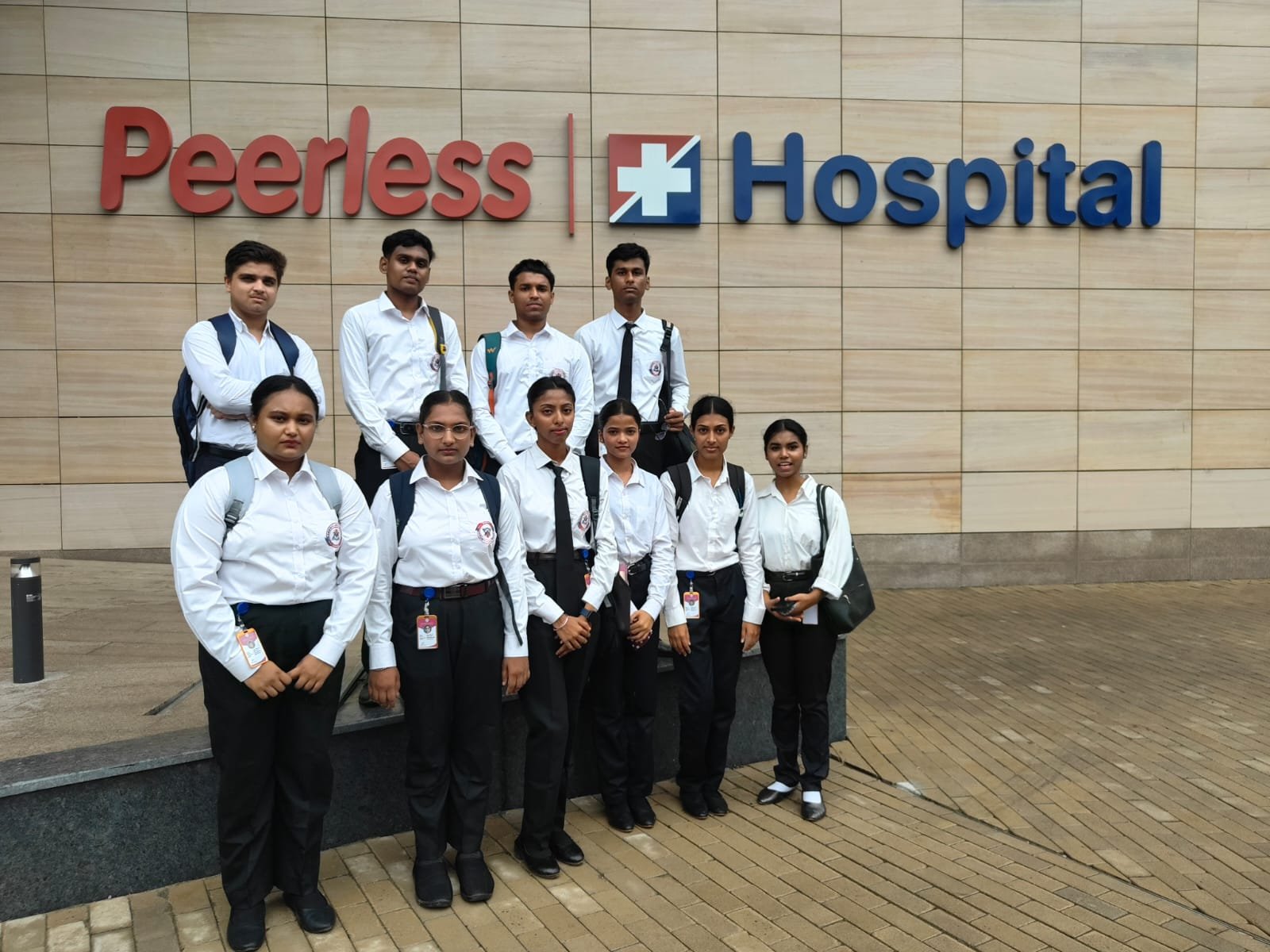
Practical learning is the key highlight of this courses. Students go through extensive training in modern hospital administrative labs, computer labs & front office laboratories.
Industrial training, workshops, guest lectures, and internships at reputed hospital brands helping them understand the industry standards and develop confidence in managing real-life hospitality operations.
IIHHM follows a straight process for admission in a easy and organized manner which process follows the below steps:
Answer:
The area of management known as “hospital management” is dedicated to organising, planning, coordinating, and managing healthcare services in hospitals and other healthcare facilities. In order to deliver high-quality patient care, it guarantees that medical services, administrative tasks, human resources, finances, and support services collaborate effectively.
Answer:
It guarantees the efficient operation of medical facilities, enhances patient satisfaction and care, efficiently oversees hospital resources, upholds accreditation requirements and quality standards, and helps physicians, nurses, and other medical professionals provide healthcare services.
Answer:
Hospital management integrates business management concepts with healthcare expertise. It focuses on enhancing patient health, safety, and well-being rather than just making money. Hospital managers handle critical care scenarios, emergencies, and quickly evolving healthcare requirements. The field requires cooperation between medical professionals, nurses, technicians, administrators, insurance providers, and governmental organisations. Hospital administrators ensure adherence to ethical standards, patient rights, and healthcare laws while using technologies such as telemedicine, Electronic Health Records (EHR), Hospital Information Systems (HIS), and healthcare analytics.
Answer:
A two-year postgraduate program called the MBA in Hospital & Healthcare Management trains students for managerial and administrative positions in public health agencies, insurance companies, pharmaceutical corporations, hospitals, and healthcare organisations. Students can also pursue a two-year Master in Hospital Management.
Answer:
The MBA in Hospital & Healthcare Management is a two-year postgraduate program consisting of four semesters.
Answer:
The curriculum includes Principles of Management, Organizational Behavior, Healthcare Systems & Services, Financial Accounting, Managerial Economics, Business Communication, Statistics for Management, Human Resource Management in Healthcare, Hospital Planning & Administration, Healthcare Marketing, Healthcare Economics, Health Information Systems, Research Methodology, Hospital Operations Management, Quality Management in Healthcare, Hospital Finance & Cost Accounting, Healthcare Laws & Ethics, Epidemiology & Public Health, Supply Chain & Materials Management, Medical Records Management, Internship/Industrial Training, Strategic Healthcare Management, Healthcare Insurance & TPA Management, Accreditation & Quality Standards (NABH, JCI), Healthcare Analytics, Project Management, and Dissertation/Research Project.
Answer:
Graduates can find employment in hospitals with multiple specialities, healthcare consulting firms and corporate healthcare chains, health insurance providers, pharmaceutical and medical device companies, organisations for public health, international health agencies, NGOs, and healthcare IT companies.
Answer:
Hospital Administrator: ₹4–8 LPA; Healthcare Operations Executive: ₹3–6 LPA; Quality Executive (NABH): ₹3–7 LPA; Medical Records Manager: ₹3–6 LPA; Healthcare Consultant: ₹5–10 LPA; Hospital Operations Manager: ₹6–12 LPA; Project Manager for Healthcare: ₹8–15 LPA; Manager of Healthcare Analytics: ₹8–18 LPA.
Answer:
Apollo Hospitals, Fortis Healthcare, Max Healthcare, Manipal Hospitals, Narayana Health, Medica Superspecialty Hospital, AMRI Hospitals, Peerless Hospital, Star Health Insurance, ICICI Lombard, Care Health Insurance, Deloitte, PwC, Accenture, Infosys, and Wipro.
Answer:
Typically, the two-year Master of Hospital Management curriculum is broken up into four semesters and includes hospital administration, healthcare economics, hospital operations management, healthcare analytics, healthcare leadership, internship/residency, and project work.
Answer:
Students can develop the skills of Leadership and Team Management, Hospital Operations Management, Financial and Budget Management, Quality Management and Accreditation, Healthcare Analytics, Strategic Planning, Patient Relationship Management, and Problem-Solving and Decision-Making.
Answer:
A bachelor’s degree from an accredited university in any field (ideally life sciences, management, nursing, pharmacy, allied health sciences, or medicine) is required.
Answer:
The Bachelor in Hospital Management (BHM) is a three-year undergraduate program covering Principles of Management, Basics of Healthcare System, Human Anatomy & Physiology, Medical Terminology, Hospital Organization & Administration, Healthcare Marketing, Hospital Information System (HIS), Healthcare Laws & Ethics, Strategic Hospital Management, Internship, and Project Work.
Answer:
Graduates in hospital management are sought for in hospitals with multiple specialities, businesses in the healthcare industry, nursing homes, diagnostic centers, health insurance providers, medical travel companies, IT firms in the healthcare industry, organisations for public health, and government health departments and NGOs.
Answer:
Operations Executive: ₹2.5–₹5 LPA; Hospital Administrator: ₹3–₹8 LPA; Patient Relationship Manager: ₹2.5–₹4.5 LPA; Medical Records Officer: ₹2–₹4 LPA; Healthcare Consultant: ₹4–₹8 LPA; Quality Executive: ₹3–₹6 LPA; Insurance Coordinator: ₹2.5–₹5 LPA; Healthcare HR Executive: ₹3–₹5 LPA.
Answer:
The Diploma in Hospital Management (DHM) is a two-year program that includes Introduction to Hospital Management, Healthcare Delivery System, Medical Terminology, Hospital Administration, Human Resource Management, Hospital Finance Basics, Inventory & Materials Management, Medical Records Management, Quality Management, Hospital Information Systems, and Internship/Practical Training.
Answer:
Those with a diploma can start working in medical facilities and clinics, diagnostic labs, nursing homes, healthcare BPOs, health insurance providers, healthcare NGOs, and front office operations in hospitals.
Answer:
Hospital management courses provide a great combination of management skills and healthcare understanding. They give students the tools they need to effectively run healthcare organisations, enhance patient care, and advance the industry as a whole. Hospital management offers a viable career path with a variety of chances and long-term professional success for today’s students looking for a steady, fulfilling, and growth-oriented career.
Answer:
One of the healthcare industry’s fastest-growing professions is hospital management. The need for qualified individuals who can effectively manage healthcare services is rising due to the quick growth of hospitals, nursing homes, diagnostic facilities, health insurance firms, and healthcare organisations. Students who take hospital management courses are prepared to manage the operational, financial, administrative, and human resource aspects of healthcare facilities, making them significant assets in the contemporary healthcare sector.
Answer:
Hospital management specialists are essential to enhancing patient experiences. They guarantee efficient hospital operations, shorten wait times, efficiently manage resources, and synchronise services amongst departments. As a result, healthcare organisations attain greater levels of efficiency and satisfaction while patients receive better care.
Hospital management refers to the formal administration and operation of hospitals and health centers. It encompasses the management of clinical and non-clinical functions, efficient use of resources, management of staff, and quality care to patients. With additional complexity added to healthcare delivery, never has there been greater need for competent hospital managers. Several would-be experts are joining advanced courses run by hospital management colleges in kolkata training students for the skill and flair required to operate in such a sensitive industry.
Hospital administration has all the various functions of planning, organizing, staffing provision, coordinating, and controlling the operation of a hospital. It provides equipment to the hospital, personnel with the necessary qualifications, and the patients are given proper and timely treatment. Some of the most important functions are:
Effective hospital management guarantees that patients are properly attended to with the appropriate amount of care at the appropriate time. It accelerates processes to save waiting time, enhance diagnosis, and offer a better overall healthcare experience.
Hospitals have to manage mammoth numbers of patients, data, and resources on a daily basis. Effective management keeps these things in balance smoothly with no delay, breakdown, and miscommunication.
New technologies like electronic health records, AI diagnosis, and telemedicine are applied in contemporary hospitals. Managers have to incorporate these technologies into hospital operations as well as train personnel to make best use of them.
The administrators of hospitals, be it pandemics or catastrophes, need to be capable of handling emergencies. The hospital administrators arrange emergency protocols, use of resources, and communication so that care continues uninterruptedly. Hospital management courses in Kolkata educates future professionals in the ability to handle crises in addressing such emergencies.
Hospital managers provide a conducive work environment for physicians, nurses, and other medical professionals by providing them with the tools, personnel, and amenities needed to effectively carry out their functions.
With a hospital management degree or diploma, one can pursue various jobs, such as:
These positions provide promising career opportunities in private and public health sectors.
Hospital management is no longer a secondary profession in today’s high-speed healthcare era—it is the very backbone of high-quality healthcare provision. As every emerging need for well-organized healthcare facilities is accompanied by the high tide of professionally qualified managers, students can put themselves forward to propel hospitals into the era of efficiency, empathy, and innovation by enrolling with a prestigious hospital management courses . Hospital management colleges in Kolkata hospitals remain obligated for a leadership position in developing such future healthcare leaders.

© All Right Reserved. | Design & Development by 2getherdigital.com